The automotive industry is undergoing a once-in-a-century transformation. As a supplier of steel sheets and related processing technologies to automotive and parts manufacturers, JFE Steel Corporation must also adapt quickly and flexibly to meet changing industry demands. How does JFE Steel view this transformation, and what technologies is it proposing in response? We spoke with Dr. Eiji Iizuka and Mr. Shunsuke Tobita of the Sheet Forming Technology Research Department at the JFE Steel Research Laboratory.
Meeting Evolving Automotive Demands in a Multi-Material Era
As a steel manufacturer, how do you view the automotive industry amid these major changes?
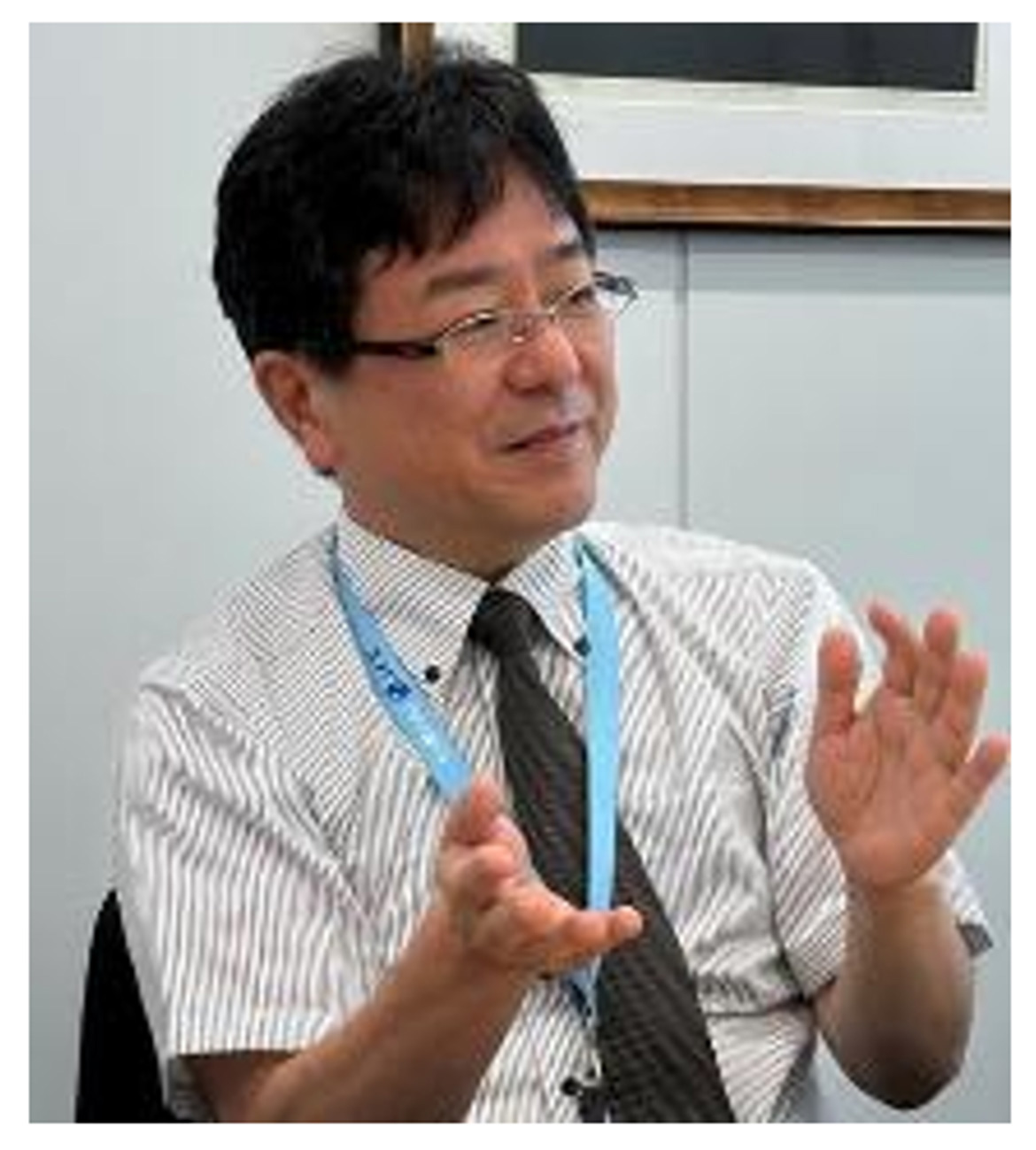
Dr. Iizuka: As a steel manufacturer, we believe our development should respond directly to the demands of the automobile industry. As the shift from gasoline vehicles to electric vehicles (EVs) significantly changes vehicle body structures, we need to understand car-body design concepts before beginning development. Our mission is to propose steel materials and forming and joining technologies that match those specific designs.
Do you think the shift toward EVs could be an opportunity for steel manufacturers?
Dr. Iizuka: Yes. The transition to EVs presents an opportunity to further demonstrate the potential of steel. Automakers are actively evaluating a wide range of materials, particularly lightweight options. Within this trend, we must continue exploring how steel can contribute.
With the growth of EVs, GigaCast technology—large-scale casting of vehicle body parts as single components— has attracted global attention, including among Japanese automakers. Some parts manufacturers have begun introducing die casting processes capable of consolidating roughly 100 components into a single part. How might this trend affect steel manufacturers if certain applications shift from steel to aluminum?
Dr. Iizuka: We recognize this trend. However, our responsibility remains the same: to propose steel solutions that meet structural requirements. To do that, it is essential to understand customer needs and clearly communicate the value that steel can provide.
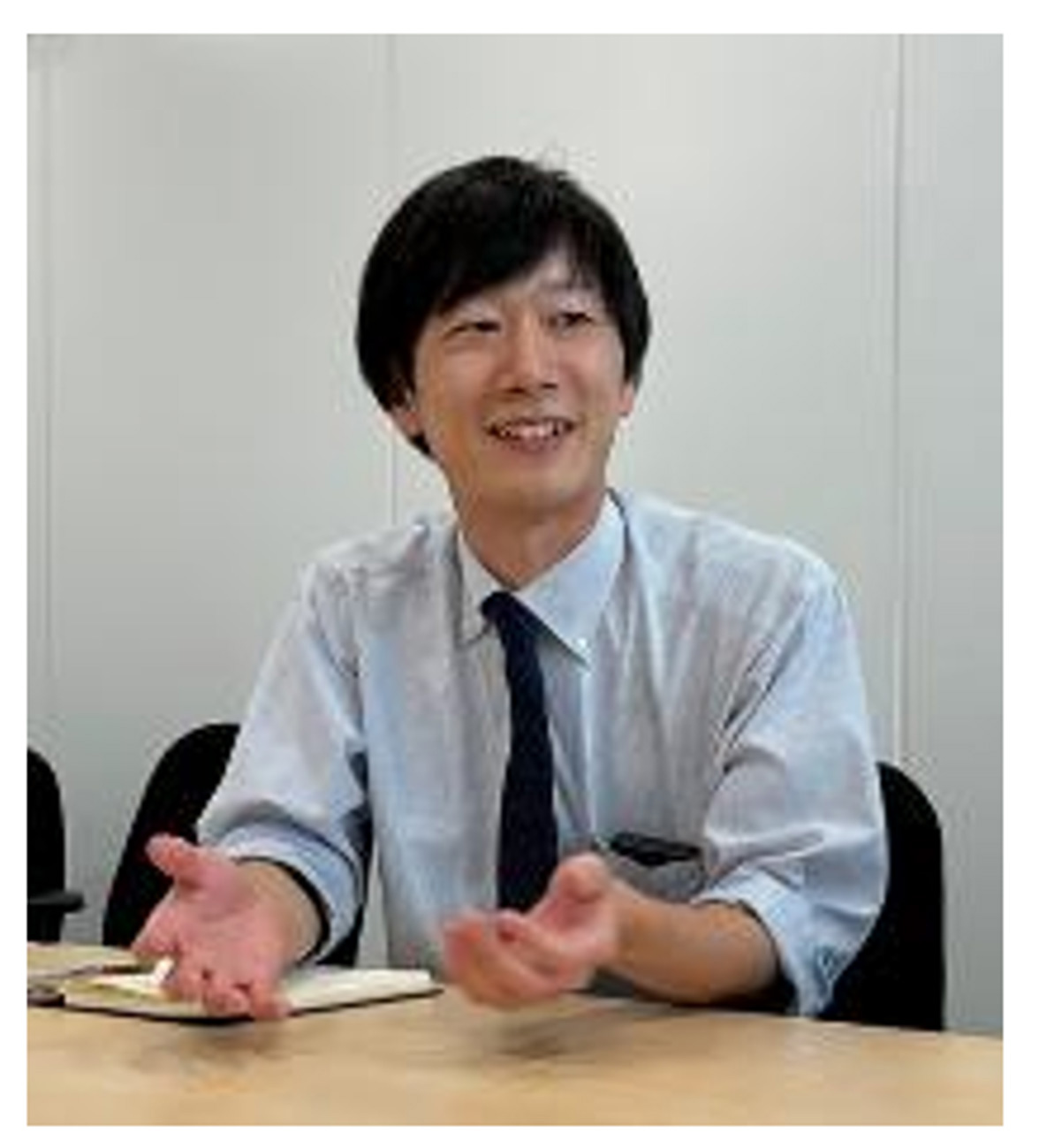
Senior Researcher
Forming Technology Research Dept.
Steel Research Laboratory
JFE Steel Corporation
Mr. Tobita: It is unlikely that all vehicle production will shift to GigaCast, so we must ensure that our development direction remains appropriate and competitive.
Please tell me about your recent development, the “Stress ReverseTM” technique, which addresses variation in dimensional accuracy. Is this development related to the growing need for weight reduction?
Dr. Iizuka: Yes, very much so. Weight reduction is critical for both gasoline vehicles and EVs, and ultra-high-tensile steel sheets offer one possible solution. However, the harder the material, the greater the variation in dimensional accuracy caused by differences in material strength. Stress ReverseTM helps control this variation. The technique takes advantage of a characteristic of steel sheets known as the Bauschinger effect, in which the deformation stress becomes smaller immediately after the direction of deformation is reversed.
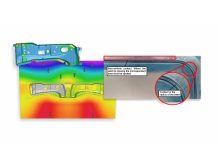
Mr. Tobita: We applied Stress ReverseTM to a prototype of the Roof Center RF (Fig. 1). The results showed that both dimensional changes and dimensional scattering could be significantly reduced. Even when tensile strength increases, the increase in curvature radius in the longitudinal direction can be suppressed. This leads to cost and time savings in die production. The technology has already been adopted for the production of multiple stamped parts. For springback control, the Wall Bending and Restrike technology is also being used in production.
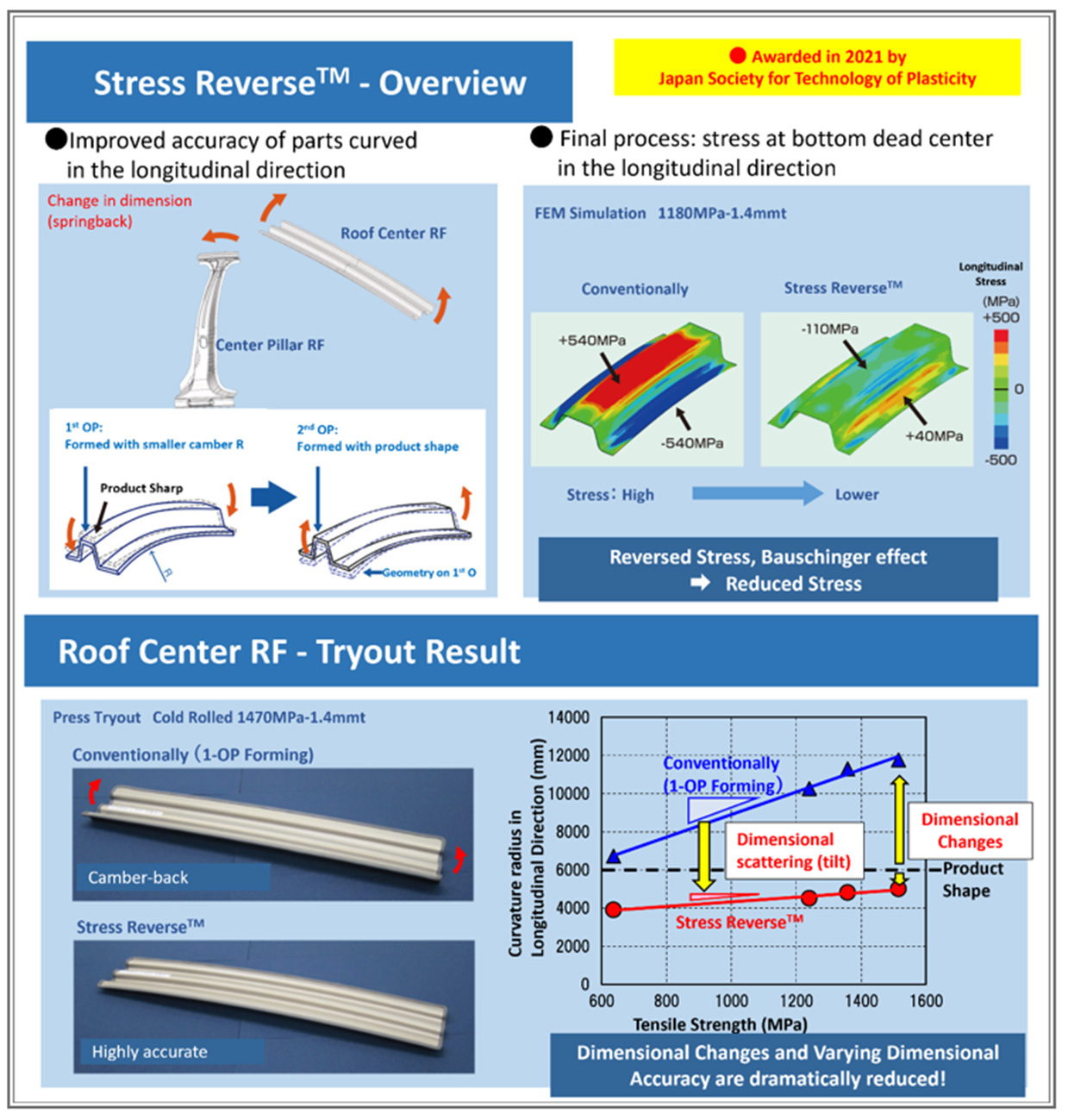
Fig. 1: The Stress ReverseTM technique
*Stress ReverseTM is a forming technique consisting of two stages: preforming and main forming. The preform is shaped with a curvature radius smaller than that of the final product, and the final forming stage slightly enlarges the curvature. As a result, the springback stress factors reverse at the bottom dead center of both the preforming and main forming processes. During final forming, the absolute stress value is reduced due to the Bauschinger effect, resulting in smaller springback. Furthermore, when variations in material strength occur, stress variation at the bottom dead center is also reduced. This leads to less dimensional variation and enables stable processing of ultra-high–strength steel sheets.
JESOLVATM: A Systematic Processing Approach for Automotive Steel Sheets
Stress ReverseTM is a technique contained in JESOLVATM, a package provided by JFE Steel that brings together steel sheet processing technologies for automotive production. How does JESOLVATM help support evolving car-body structures and the growing demand for weight reduction?
Dr. Iizuka: JESOLVATM is an abbreviation for “JFE Excellent Solution for Vehicle Application” and it refers to a set of processing technologies for automotive steel sheets developed by JFE Steel. The package was released in 2019 to support automakers working with high-strength steel sheets.
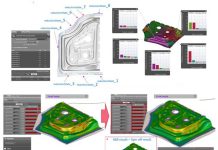
As shown in Fig. 2, JESOLVATM includes technologies for car-body design support, forming, and joining (shown in blue, red, and green), all of which are interconnected. The design support tools include topology optimization to help design lightweight, high-rigidity car-body structures, as well as methods for evaluating and improving collision performance. The forming technologies include prediction of stretch-flange cracking using strain gradients, inflow control to reduce wrinkles, and Stress ReverseTM to reduce springback. For joining, Pulse SpotTM welding and Intelligent SpotTM welding are available for ultra-high-tensile-strength steel parts. Together, these technologies provide comprehensive support for car manufacturers.
We also offer a series of advanced steel sheets called JEFORMATM (shown in yellow in Fig. 2), which are used together with the JESOLVATM processing technologies. In this way, we can support every stage of car-body development, from design through to stable mass production. As a steel manufacturer, we have deep expertise in material technologies, but we also have extensive experience in design support, forming, and joining. The combination of these capabilities is our strength.
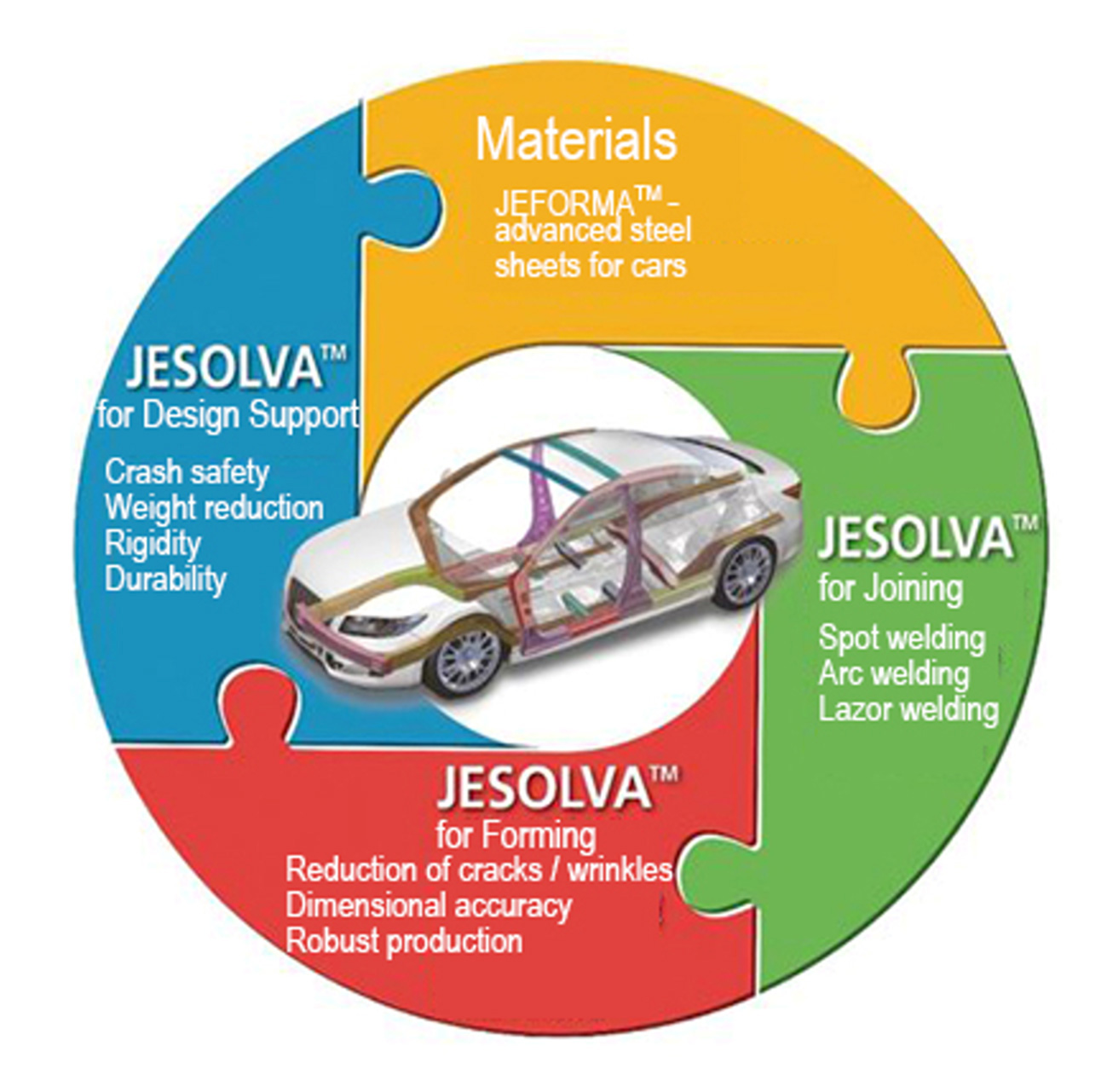
Fig. 2: JESOLVATM
JFE Steel operates the Customers Solution Lab (CSL) in Chiba and the Customer Center Fukuyama (CCF) in Fukuyama as bases for Early Vendor Involvement (EVI) (Fig. 3). What role do these facilities play?
Dr. Iizuka: Through EVI, JFE Steel participates in new vehicle development from the early stages. We work closely with automakers and provide proposals on materials, structures, forming, and welding technologies. CSL and CCF serve as research centers for exhibitions and experiments, supporting joint research between customers and JFE Steel. Our latest technologies, including EV car-body structures, are displayed there and often inspire new ideas for collaborative projects.
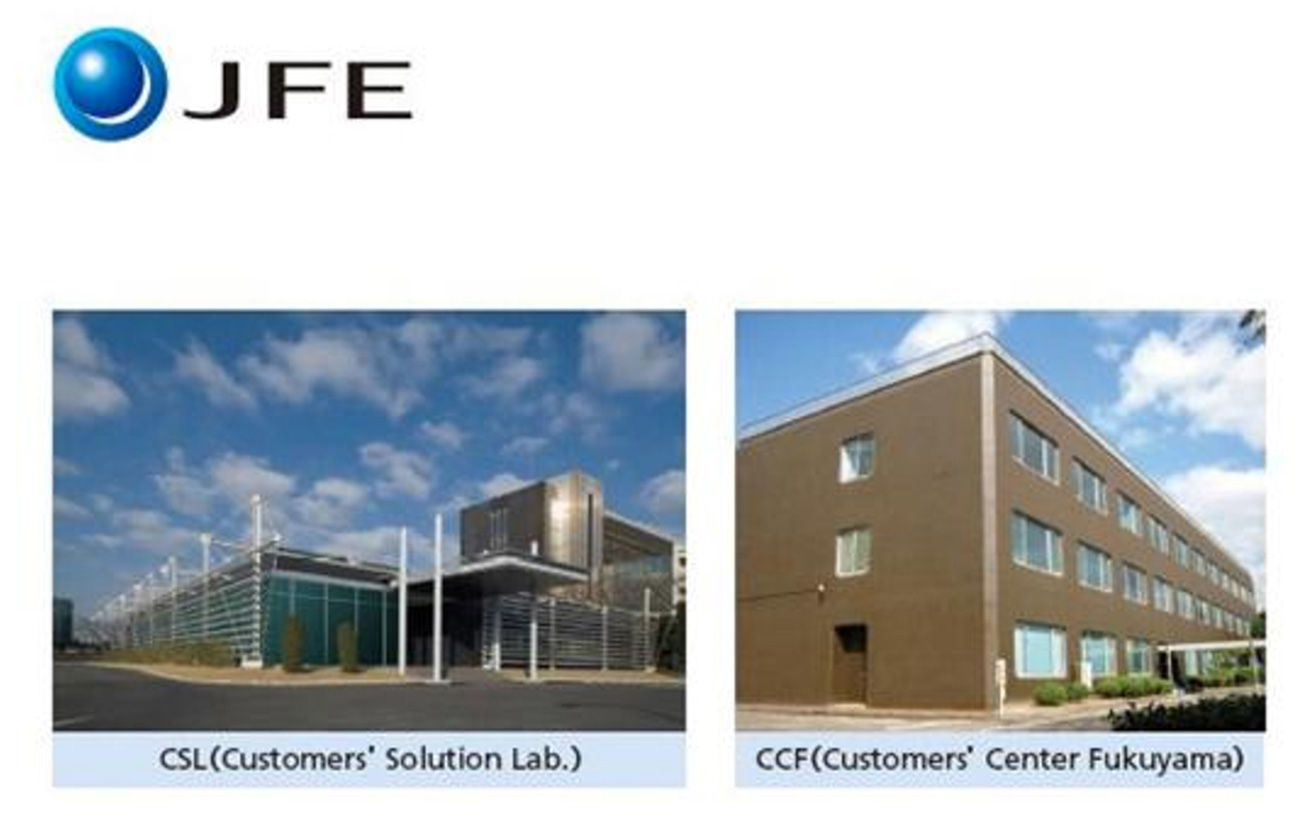
Fig. 3: EVI bases
AutoForm Tools for Consistent and Efficient Production
Car manufacturers often mention difficulties related to variations in steel properties. Do you have any advice from the perspective of a steel manufacturer?
Dr. Iizuka: When dealing with variation, the key is maintaining part quality during mass production. Production can become unstable due to variables such as changes in forming conditions and material properties, as well as tool wear and friction. It is therefore important to account for these variables when managing forming quality.
The margin, or tolerance in forming, plays an important role in accommodating such variation. If the margin is too small, defect rates may increase. If it is too large, it can lead to unnecessary preparation, including additional man-hours, higher costs, and extra process steps. Each production process requires an appropriate margin. However, in practice, it seems that a uniform margin has often been applied across different processes.
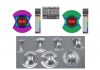
In this context, AutoForm-Sigma can be a powerful tool for analyzing variables and gaining insight. By understanding how formability varies between parts and across specific regions, we can determine more appropriate margins.
Do you have any advice on how AutoForm-Sigma can be used effectively during production?
Dr. Iizuka: For example, if a sporadic crack appears during production, AutoForm-Sigma can quickly identify the contributing factors. In that sense, it is a very useful tool for diagnosing defects. I believe it is particularly effective for identifying the causes of sporadic cracks.
I understand that you run simulations as part of both JESOLVATM and JEFORMATM. Why do you use AutoForm?
Mr. Tobita: We use AutoForm for forming simulations. Because AutoForm-Solver runs simulations very quickly, we can analyze multiple sets of forming conditions in a short amount of time. It has been extremely helpful.
What do you value most about AutoForm?
Mr. Tobita: I am amazed with its calculation speed. Speed is especially important during the pre-processing stage. We can run many simulations quickly and repeatedly to test different patterns, which helps shorten the overall development period.
You mentioned that friction, or tribology, is one of the variables that can cause instability in production. Should friction be considered in simulations?
Dr. Iizuka: For panels with large inflow, the accuracy of the friction coefficient can be critical to simulation accuracy.
Finally, please tell us about JFE Steel’s efforts to reduce environmental impact. What initiatives are underway to reduce CO₂ emissions and protect the environment?
Dr. Iizuka: As a steel manufacturer, we are working to make steel production more carbon neutral and to supply green steel materials. We are also continuing to develop high-strength steel sheets. By providing strong, lightweight materials together with forming techniques that avoid cracks and wrinkles, we can contribute to reducing CO₂ emissions.
(Company Overview)
JFE Steel Corporation
Established: April 1, 2003
Headquarters: Uchisaiwai-cho 2-2-3, Chiyoda-ku, Tokyo
Capital: 239.6 billion yen
Number of employees: 44,469 (consolidated as of March 31, 2023)
Business Operations: Production and sales of steel products (including thin sheets, thick sheets, shaped steel, steel pipes, stainless steel, electromagnetic steel sheets, bars and wires, iron powder, and others)
URL:https://www.jfe-steel.co.jp/