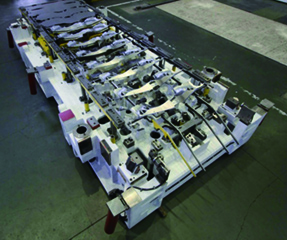
Facing fierce competition from abroad, German toolmakers must develop viable strategies to remain competitive. One toolmaker in Germany has taken this step. Wesoba, located in Schwarzenberg, Germany, spoke with AutoForm’s Leonard Krauss about its increasing use of digital twin software, offering new perspectives on how German toolmakers are responding to outsourcing trends in a market that serves the world’s largest OEMs.
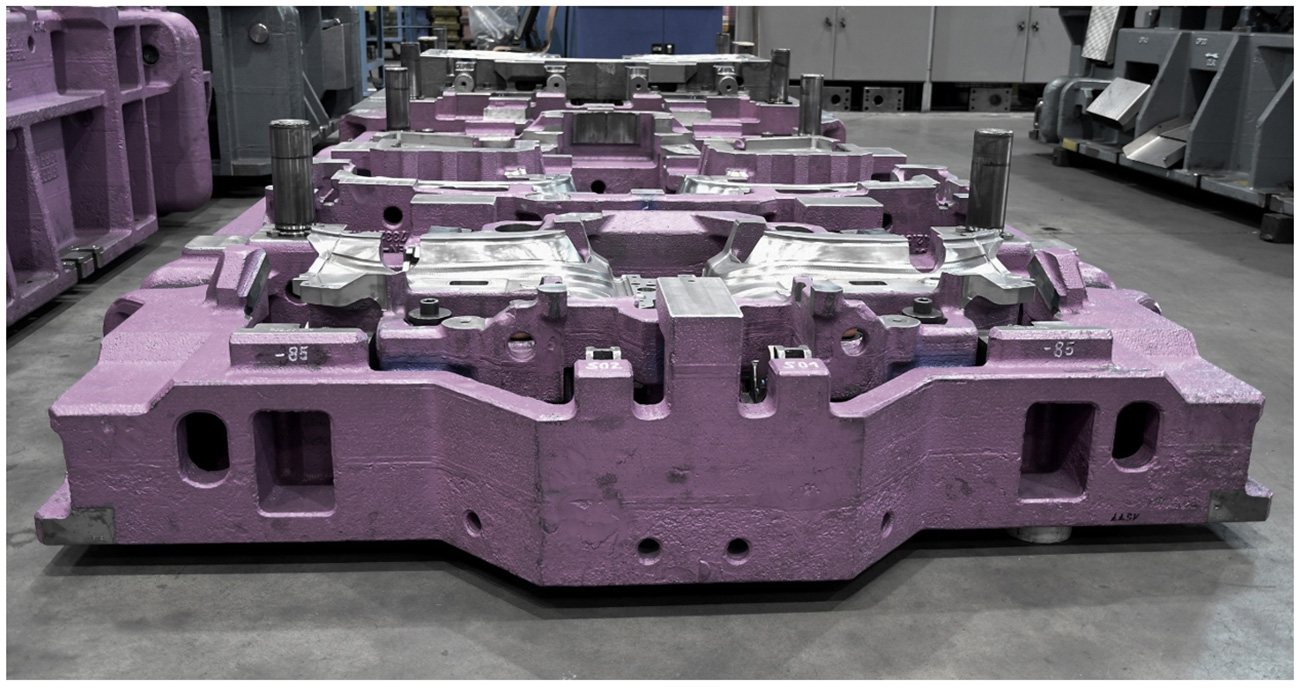
Wesoba emerged in 1992 from the special machine design department of the Schwarzenberg washing machine factory. Today, the company has 85 employees and works almost exclusively for the automotive industry. The name Wesoba is an acronym for “Werkzeug- und Sondermaschinenbau,” reflecting the company’s two core business areas. Tool manufacturing accounts for 60 to 70 percent of the company’s annual turnover of ten million euros, while mechanical and plant engineering contributes the remaining 30 to 40 percent.
“In the special machine design segment, we primarily build production lines and fixtures for welding or bonding processes,” explains Managing Director Christian Pfaff. “In addition, we also design and install robotic systems. Most recently, we implemented a fully automated system with four robots for assembling vehicle frames.” The special machine design department also develops specialized equipment such as hydraulic piercing systems. Integrated into an axle assembly production line, these systems compensate for distortion that occurs after a welding stage.
Development toward Larger Tools
“In toolmaking, we focus on transfer and line dies for parts made of steel, stainless steel, and aluminum,” reports Georg Pfaff, who manages the company together with his brother. “Our main focus is on deep-drawn parts with complex geometries. In this area, we are constantly moving toward the development of larger tools.”
This increasingly applies to parts made from high-strength steels, where extremely tight tolerances and high surface quality requirements must be met. “This combination explains why we need to use simulation,” Pfaff continues. “Experience and manual craftsmanship alone are no longer sufficient.”
Confidence with Customers
Although Wesoba’s collaboration with AutoForm began back in 2008, it has grown over the past two years. “Today, we see these tools as key to ensuring our parts can be manufactured and to confidently assuring our customers that everything will work as planned. This gives us crucial support early in the manufacturing process and helps us achieve dimensionally accurate parts,” says Christian Pfaff.
“In addition, simulation gives us a time advantage in the development stage. We can now obtain the required compensation much earlier. What once took several manual correction loops, including design modifications, reprogramming, welding, mechanical processing, and tryout, is now done by the software, faster and more accurately.”
Without a Single Correction Loop
“The growing collaboration began with training courses that we tailored to the creation of Class-A surfaces,” explains Leonard Krauss, Global Key Account Manager at AutoForm. In addition to Wesoba’s simulation engineers and project managers, a representative from the customer side also took part in this exclusive training.
“That immediately helped build trust,” notes Georg Pfaff. “Not only because the customer gained a better understanding of what needs to be considered during simulation and how to evaluate the results, but also because AutoForm is the automotive industry standard.”
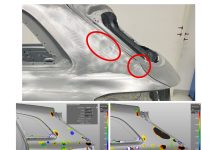
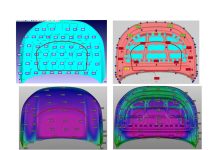
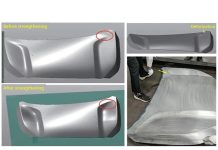
For the initial gray zone part, not a single correction loop was required: 97% of all measuring points were immediately correct. “This was followed by another training session on springback compensation,” adds Krauss. “Using a Mercedes-Benz wheelhouse as the basis, we implemented the first project and jointly developed the compensation step by step.”
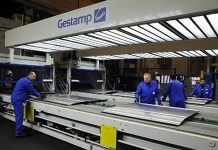
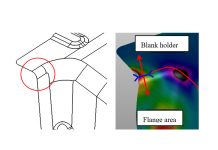
During the wheelhouse project, there was an initial deviation between the simulation and the actual result. Through several iterations, the issue was analyzed and refined. In tool and special machine design, Wesoba relies on a high degree of vertical integration, using equipment such as large portal milling machines for mechanical processing.
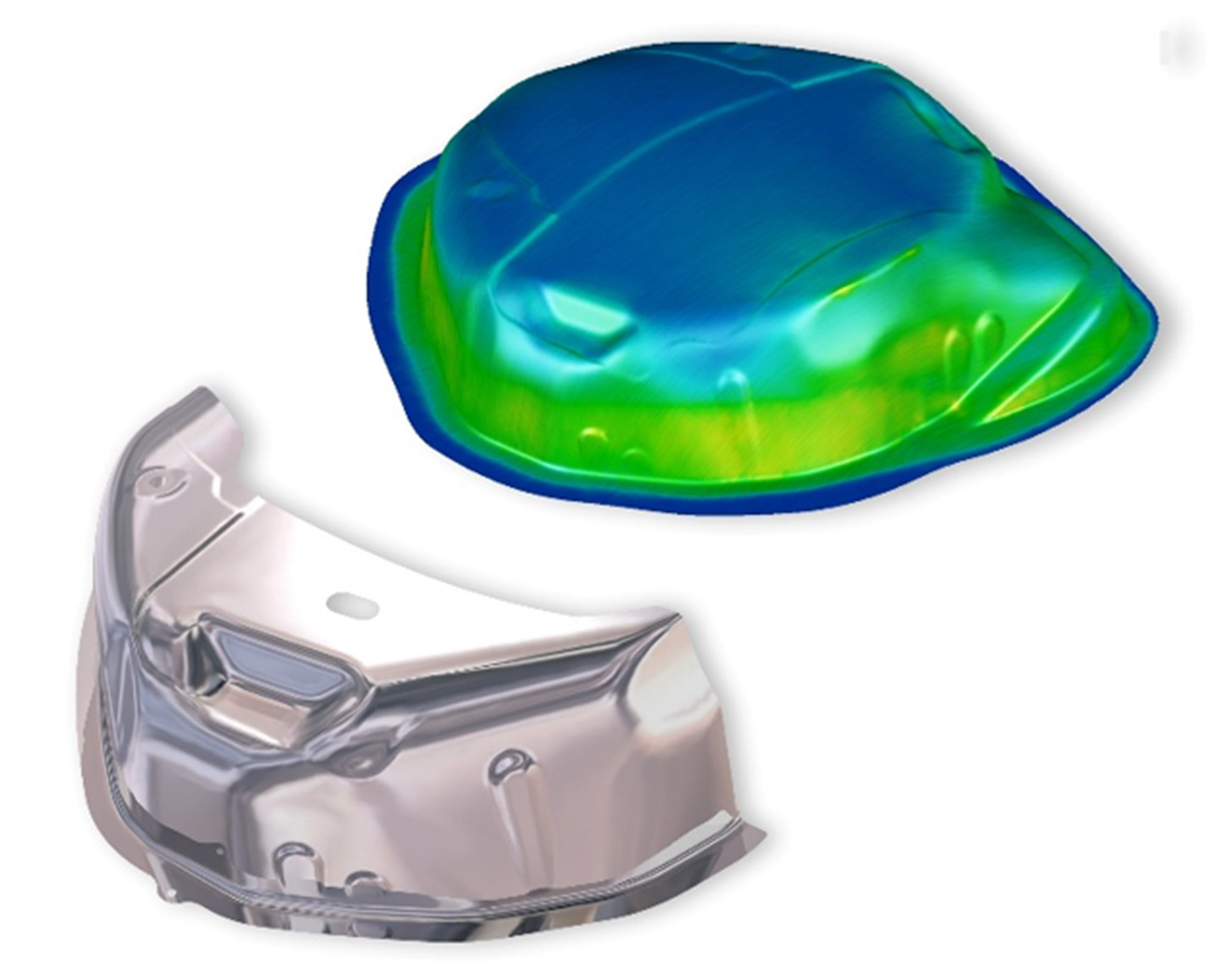
The first project was initiated during a training course on springback compensation. The compensation for a wheelhouse was realized step by step.
Efficient and Cost-effective
Wesoba identifies three main benefits of using stamping simulation. “First of all, it brings us much closer to real production conditions. Secondly, as we need fewer correction loops and can achieve results faster, we save both time and money—amounting to roughly three weeks of effort saved per part in compensation work. Thirdly, we obtain more accurate results than when working manually,” summarizes Christian Pfaff.
In addition to springback in the tool position, it is now also possible to determine springback in the vehicle position and take the effect of gravity into account. Considering these advantages, Pfaff is confident in saying that without digital twin tools, Wesoba would be far less likely to take on increasingly large and complex parts, or visible parts with demanding surface-quality requirements.
On the Outsourcing Problem
“Of the roughly 1,000 parts that were still being sourced within the German market about 15 years ago, only around 200 or 300 remain today,” explains Leonard Krauss, describing the outsourcing problem faced by the German toolmaking industry. “Many tools are now manufactured in Eastern Europe, Italy, or East Asia. This decline in order volume has led to a number of insolvencies in recent years.”
However, AutoForm’s Leonard Krauss is confident that complex parts will continue to be sourced in Germany. These parts represent the future of German toolmaking, as well as the future of companies capable of serving this segment.
“One of these companies is Wesoba from Schwarzenberg,” Krauss continues. “This is particularly true as the company systematically uses our simulation software along the entire toolmaking process. It allows Wesoba to produce parts within the required tolerances more quickly while maintaining planning reliability and cost efficiency.”
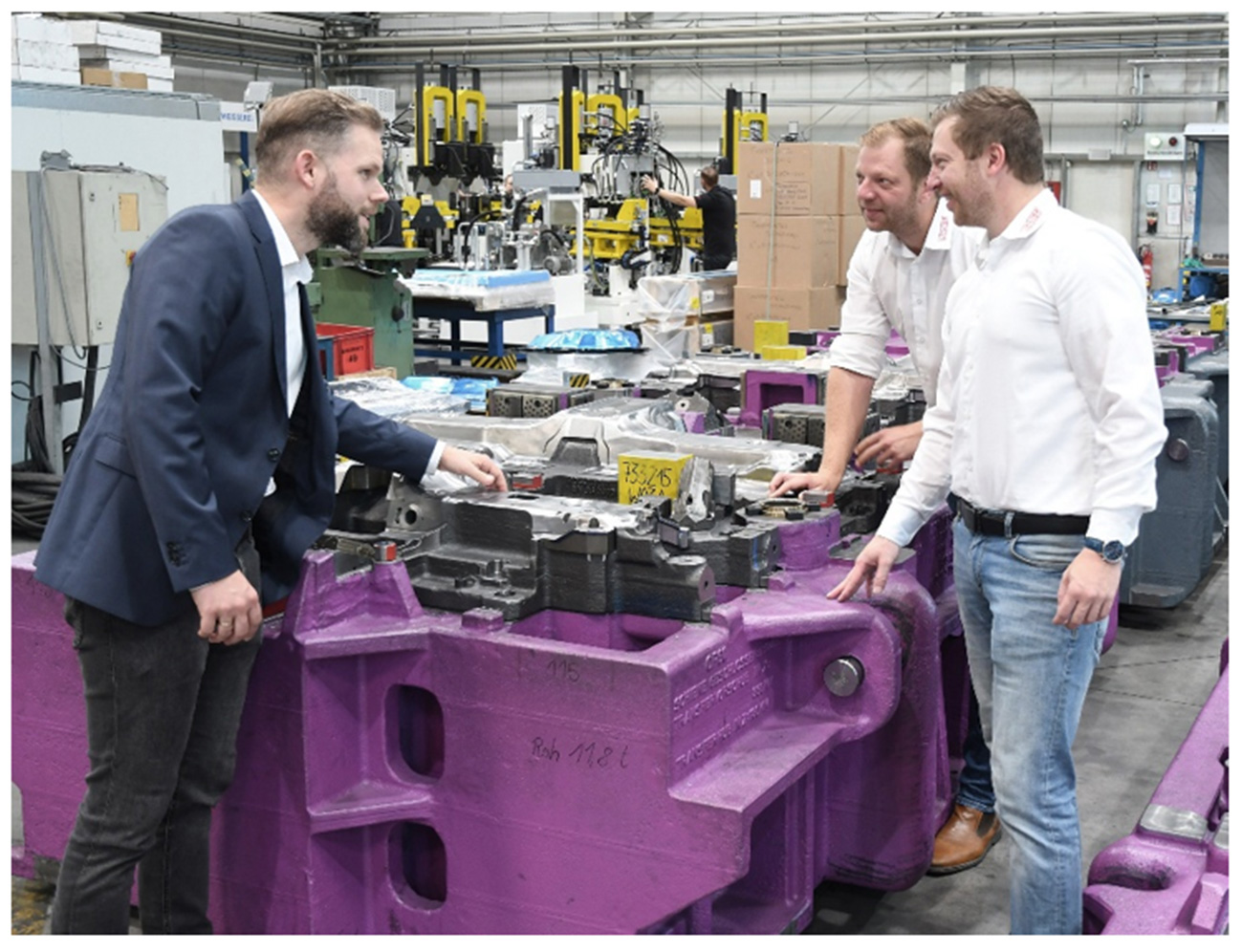
Leonard Krauss, Georg Pfaff, and Christian Pfaff
Source: Extracted from Rückfederungen wettbewerbsrelevant kompensieren published in Der Schnitt- & Stanzwerkzeugbau 6/2024.
Images: Wesoba/AutoForm