The automotive industry faces constant pressure to reduce lead times and development costs while improving the geometric quality of Body in White (BiW) components during the assembly process.
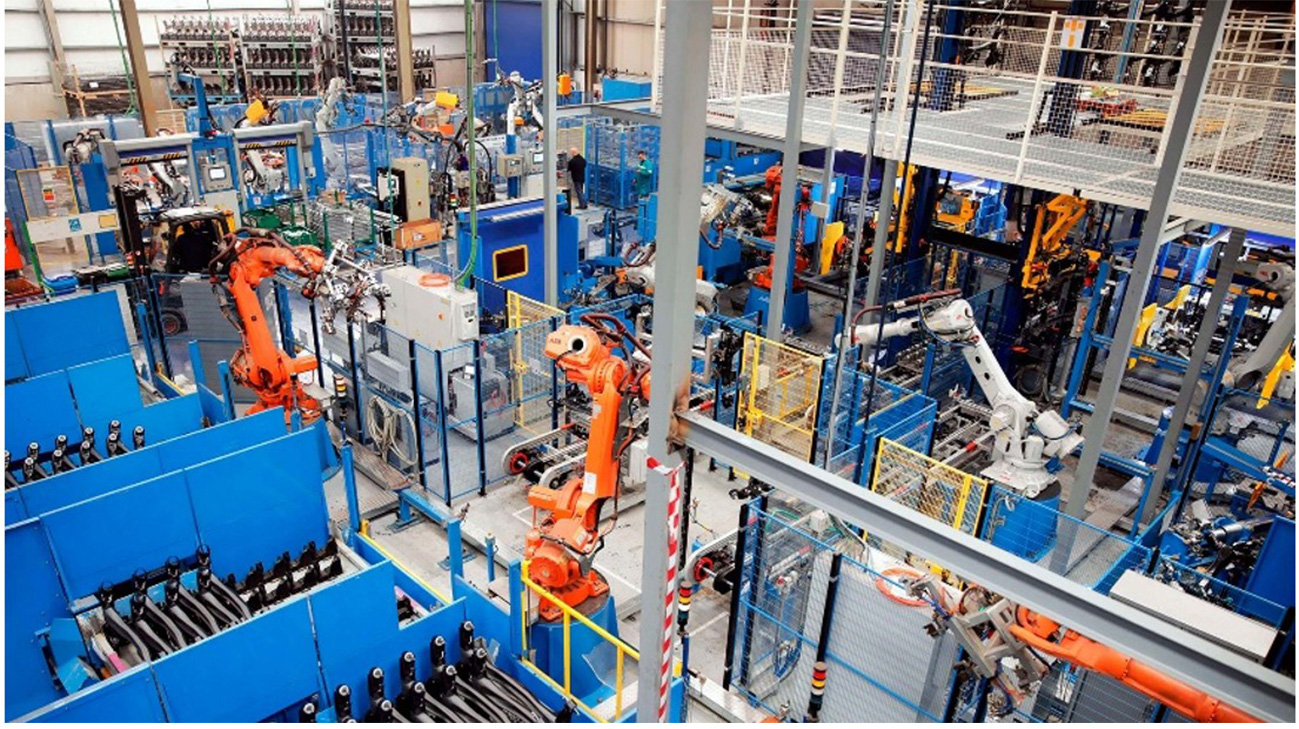
Figure 1: BiW production line, Gestamp
Traditionally, welding and assembly processes are adjusted through physical tryout, which requires significant time and resources due to the accumulated variations introduced during the stamping process. This article presents the implementation of Virtual Assembly integrated into the complete simulation cycle at Gestamp Brazil.
The proposed solution breaks the traditional silo between the assembly stages by directly connecting stamping simulation CAD data with optimized springback revisions. Through a standardized workflow that uses CAD data and optimized springback developments, the need for a second physical tryout of pressed parts is eliminated. In addition, the clamping strategy can be validated before the physical fixtures are built. Finally, 3D scanning results for individual parts can also be incorporated into the layout and production phases.
The results obtained from practical applications demonstrate that this integrated analysis enables more accurate decision making, reducing assembly dimensional quality gaps and improving the reliability of new business opportunities. It also positions Gestamp as a benchmark in industrial virtualization within the automotive and metal-mechanical sectors.
Figure 2: Gestamp Automotive, S.A
The manufacturing of modern vehicles demands seamless coordination between design and technical execution. At the heart of this complexity lies the BiW (Body in White), where hundreds of stamped parts are welded together to form the vehicle’s structural framework while meeting both safety and aesthetic requirements. One of the longstanding challenges at this stage is dimensional variability: a part that perfectly matches the CAD model rarely maintains its exact geometry after forming due to the phenomenon of springback.
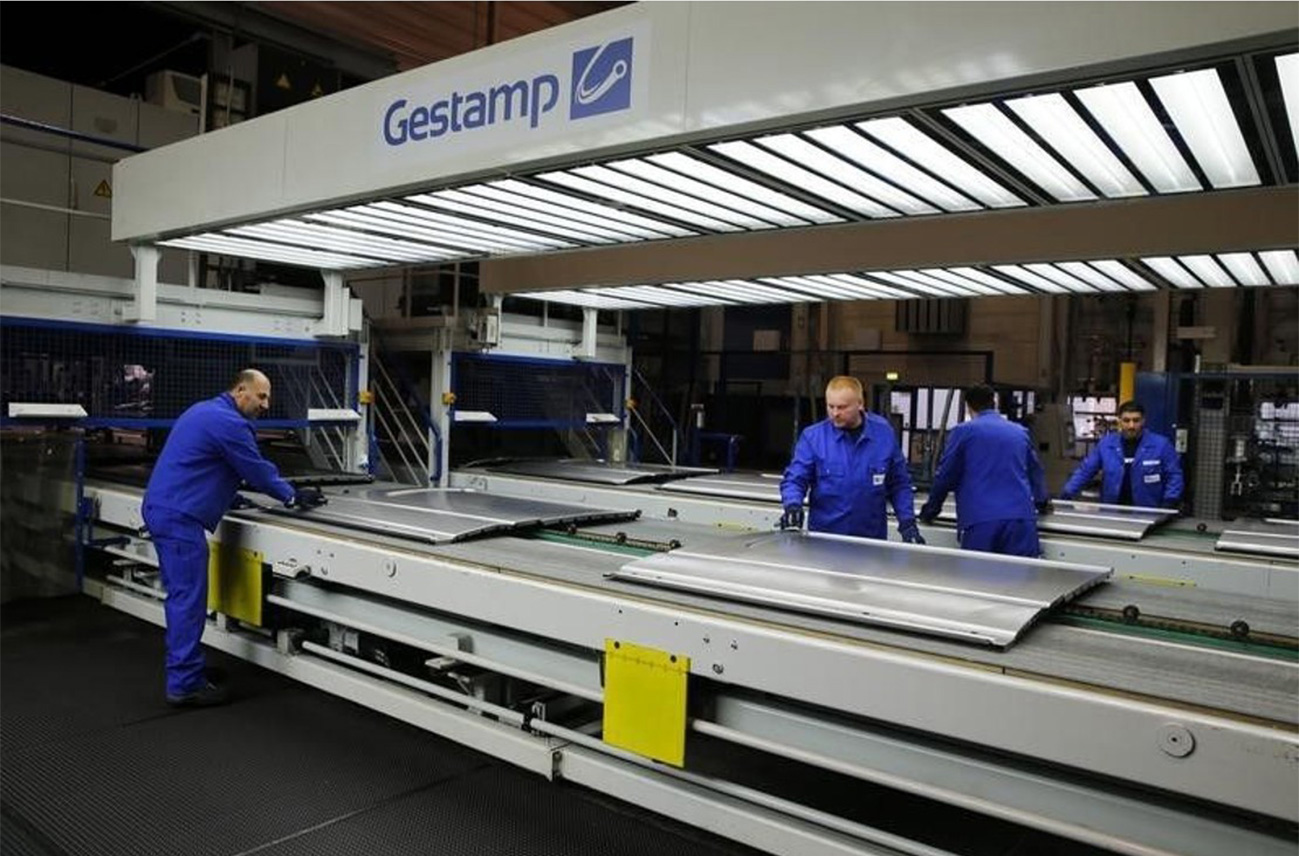
Figure 3: Stamping process
Springback, or elastic recovery, results from various factors in the stamping process, including variations in material or blank mechanical properties (yield strength, tensile strength, anisotropy, and thickness), forming geometries (bend radius and angle), and process conditions (clearances, temperature, and friction). To mitigate this effect, several correction and compensation methods are applied to produce individual parts that are as close as possible to the CAD geometry while remaining within tolerance. However, even when these correction efforts produce dimensionally accurate individual parts, they do not necessarily result in a dimensionally compliant assembly.
This article addresses the transition from a reactive to a proactive and comprehensive approach to BiW process engineering. The primary objective is to bridge the gap between design theory and production reality. By integrating AutoForm Forming and AutoForm Assembly through Virtual Assembly (Figure 4), Gestamp Brazil aims not only to optimize productivity but also to establish a new standard of reliability for customers and new business opportunities. This approach transforms simulation into a strategic tool for evaluating both technical and financial feasibility, supporting decision making during the quoting, process design, planning, and optimization phases. It also enables early intervention when potential issues are identified, resulting in a more robust manufacturing process with high CP (Potential Capability) and CPK (Real Capability).
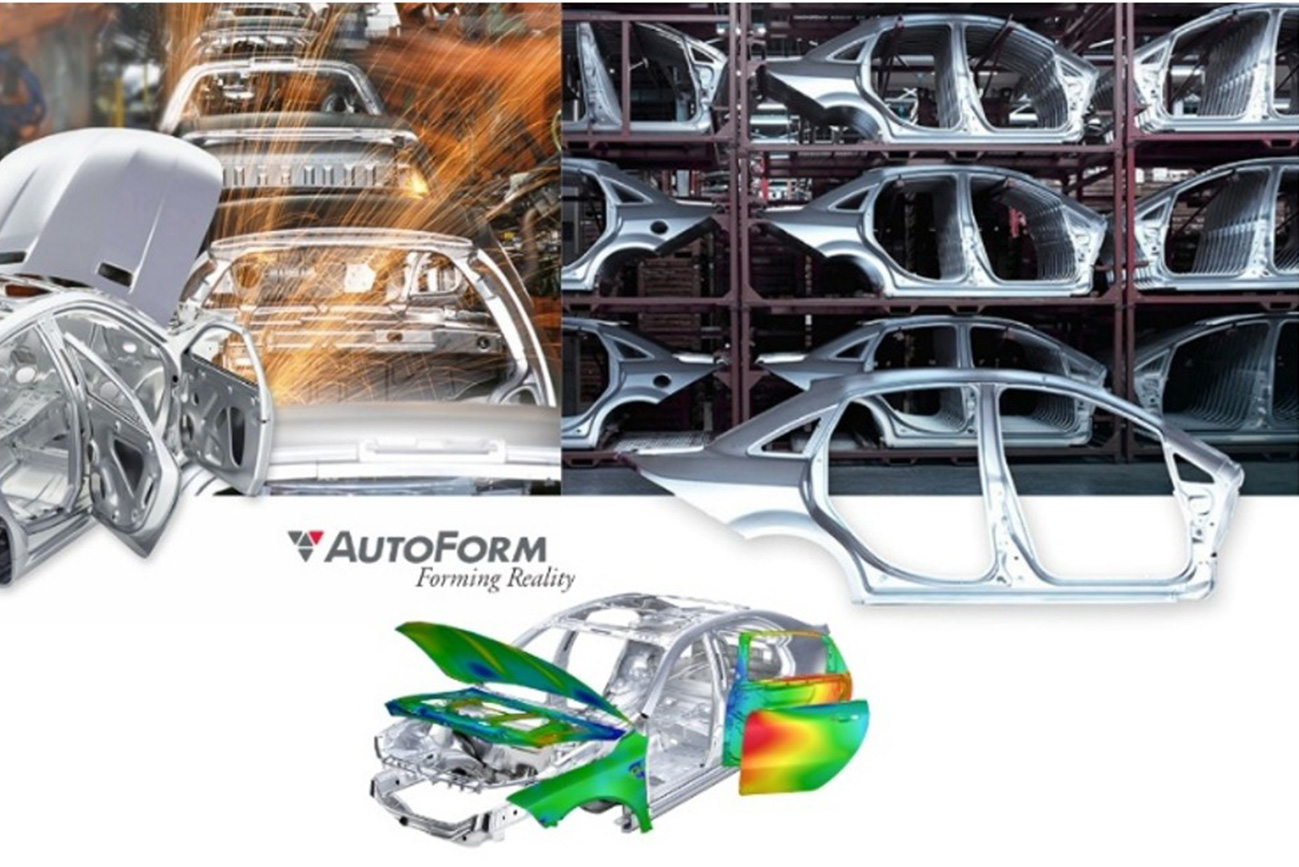
Figure 4: AutoForm Forming and Assembly – full digitalization of the production process
To understand the value of Virtual Assembly, it is important to first review the fundamentals of the manufacturing processes involved.
BiW Cycle and Stamping Processes
The production process begins in the press shop, where either cold stamping or hot stamping is performed. After forming, dimensional deviations may occur, and these must be anticipated and mitigated. If these deviations are not considered during the assembly of welded components, welding robots and fixtures can encounter adjustment issues, resulting in out-of-tolerance assemblies or excessive stress at the weld points. This can lead to failures during crash testing or weak points in the vehicle body.
Virtual Tryout is a concept developed by AutoForm that uses advanced process simulation software, such as AutoForm Assembly, to predict the physical behavior of components in a fully digital environment. This makes it possible to validate not only dimensional surface deviations but also the GD&T (Geometric Dimensioning and Tolerancing) of assembly, welding, and hemming processes, as well as their behavior during the paint oven process. By integrating physics-driven studies into the PFMEA (Process Failure Mode and Effects Analysis), potential failures can be identified early to support strategic decision making. This methodology strengthens APQP (Advanced Product Quality Planning) and improves predictability during the PPAP (Production Part Approval Process) phase, helping ensure compliance from the first production batches.
These studies make it possible to use actual stamping results, including the final geometry and residual stresses of individual parts, as key input data for assembly simulations. By using stamping behavior to predict assembly accuracy, a complete virtual connection is established between these processes, achieving what Gestamp refers to as Full Cycle Simulation, as shown in Figure 5.
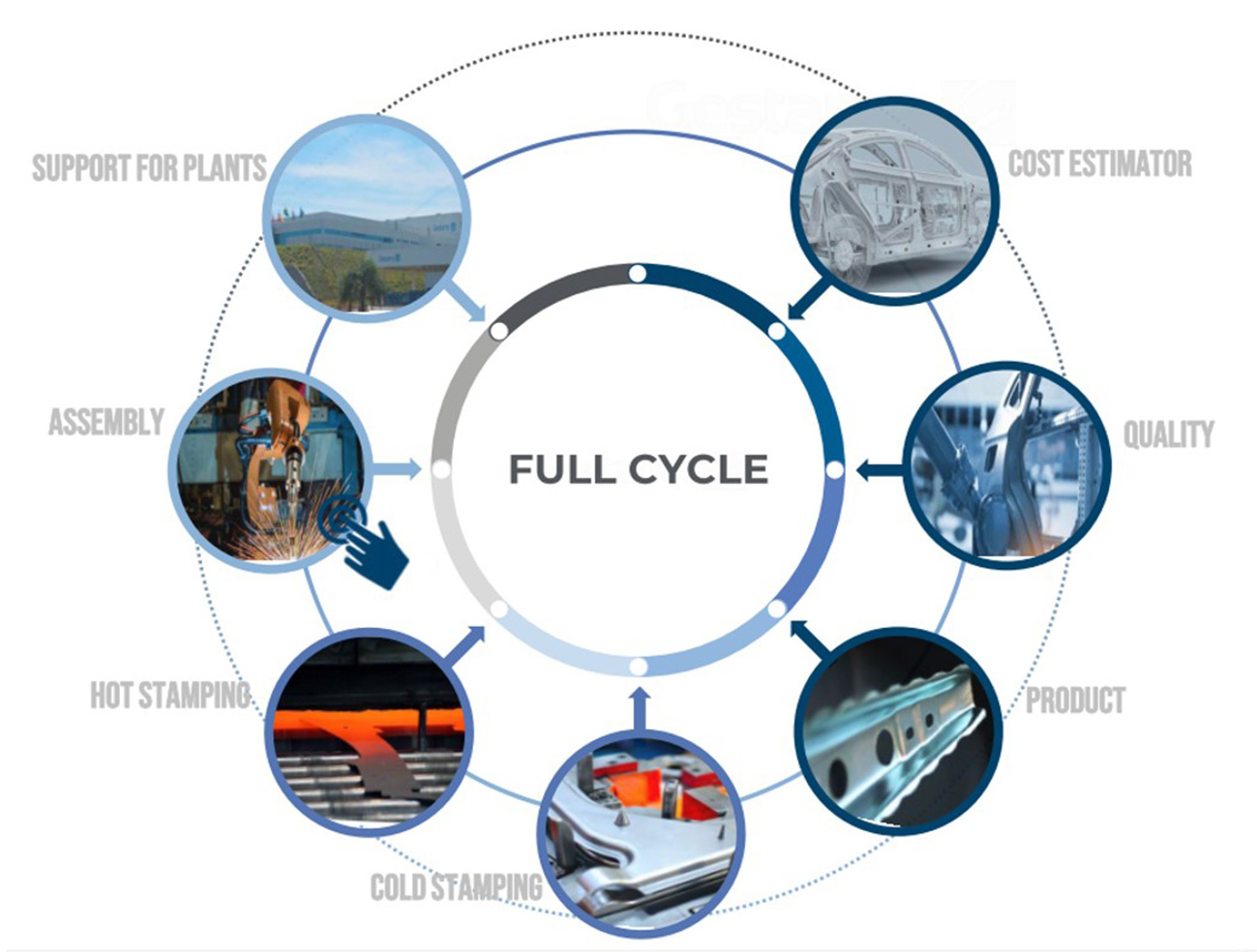
Figure 5: Gestamp Full Cycle
The methodology implemented by Gestamp Brazil’s Advanced Engineering team is based on vertical data integration, as shown in Figure 6. The workflow is structured around four pillars: Structuring, Positioning, Action, and Objective.
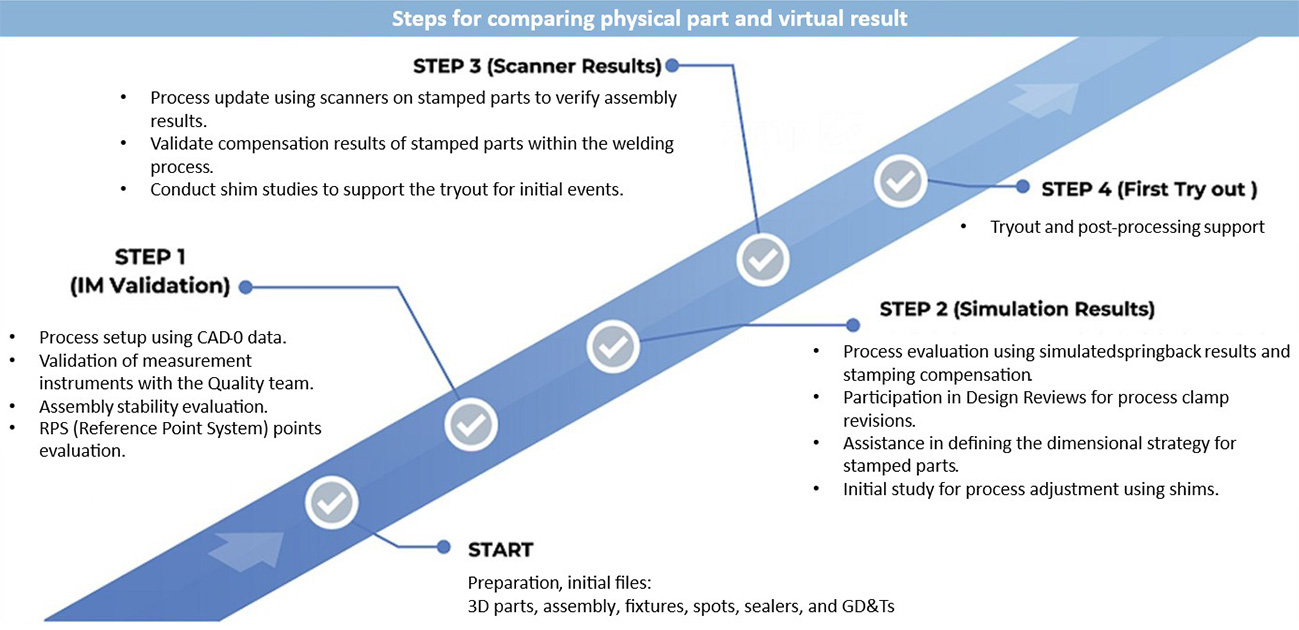
Figure 6: Vertical data integration
The Full Cycle strategy enables assembly simulations to receive accurate data from multiple sources:
- Cost Estimation: Preliminary financial feasibility, including determining the number of fixtures and robots required within the work cells.
- Product: Geometric validation, tolerances, and part-to-part collision analysis.
- Stamping Processes (Cold/Hot): Exporting the deformed mesh generated by the stamping process.
- Plant Support: Continuous improvement of serial production processes.
Building on these four pillars, the virtual assembly process follows four critical stages of comparison and validation.
Step 1 (CAD-0 Data – Use Case 1)
Nominal CAD data (CAD-0) is used to evaluate the impact of the welding process on final dimensions and to validate measurement fixtures under both Free State and Supported (Restrained) conditions.
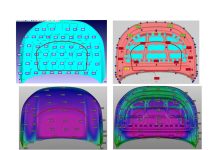
For studies conducted during the quoting phase, Gestamp uses the AutoForm Assembly Estimated function to estimate the deformation of individual parts and identify the project’s critical components. This makes it possible to predict where greater forming effort will be required. A practical example involving side members is shown in Figure 7. After applying the estimated deformations, a reduction in assembly accuracy is observed, making it possible to predict not only the magnitude of the deviation but also its location and the specific parts responsible for it.
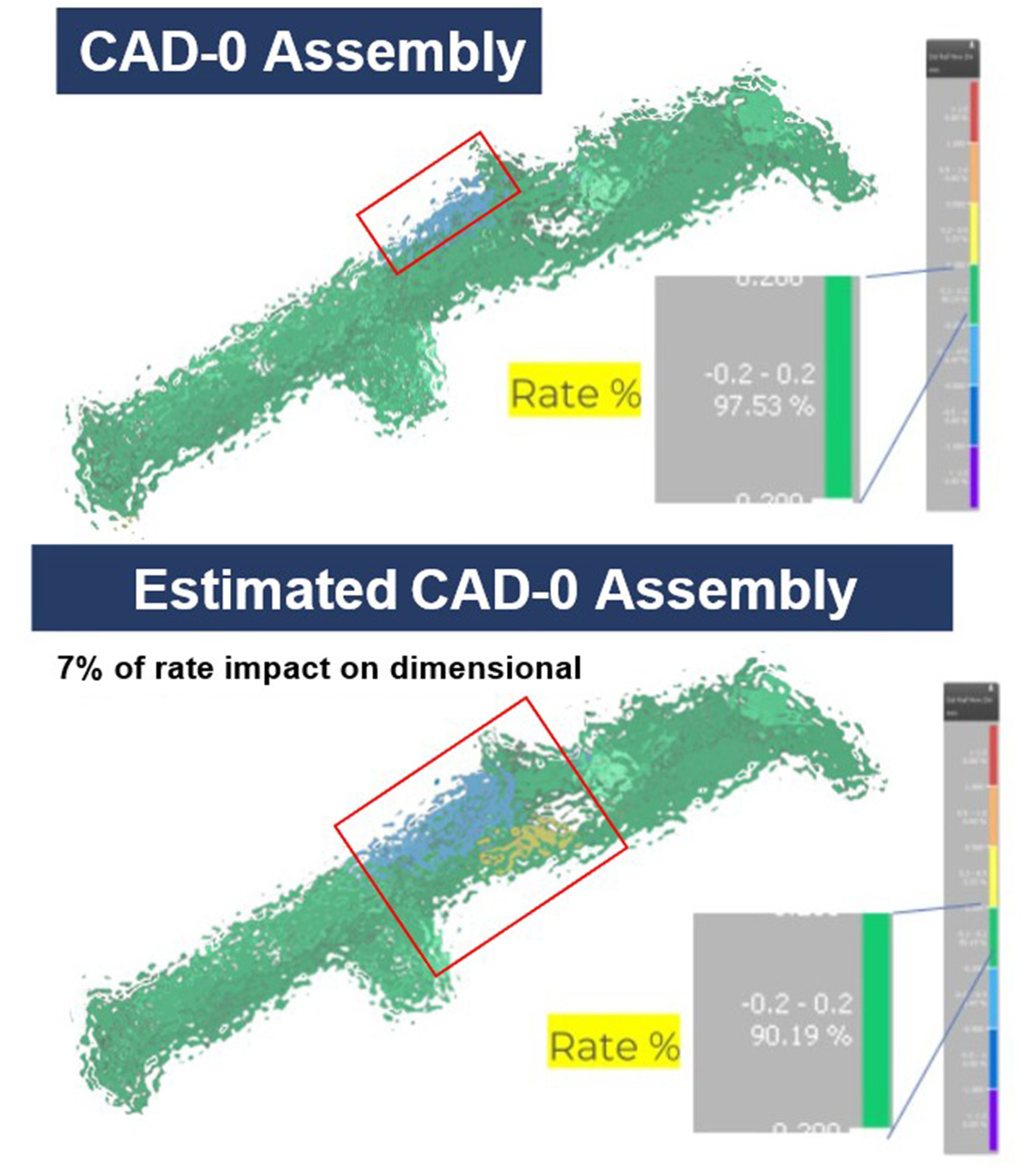
Figure 7: Practical example using side members
In addition to feasibility studies focused on critical parts, anchoring studies are also performed to validate dimensional stability at the support points, which would otherwise only be validated or observed during the physical process. This supports product modifications based on the results of assembly simulations. Figure 8 illustrates the dimensional improvement achieved by validating the required number of supports.
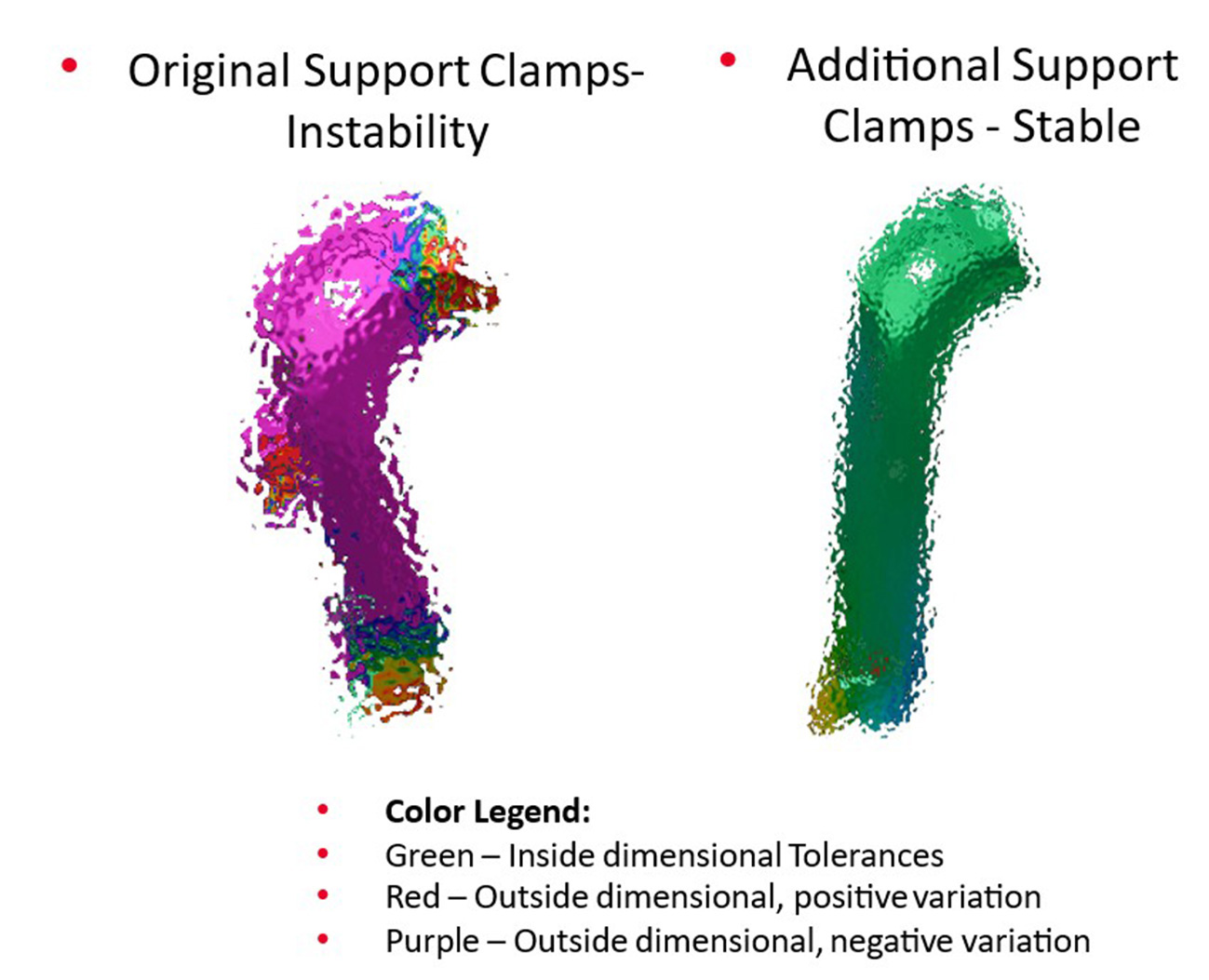
Figure 8: Validation of dimensional stability
Step 2 (Virtual Prediction – Use Case 2)
Stamping simulation results (springback and compensation) are integrated to review the clamping strategy, welding sequence, and overall dimensional strategy.
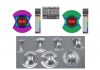
By reviewing the welding sequence and the number of clamps used on the fixtures, Gestamp Brazil has achieved excellent results in its part constraint analyses. This validates the project’s RPS (Reference Point System), or datums, by verifying component stability during the welding process. Whenever possible, Gestamp Brazil also proposes optimizing the number of toggle clamps, provided stability is not compromised, allowing improved welding gun access without sacrificing dimensional integrity. Figure 9 shows this process applied to a floor panel (tunnel) using AutoForm Forming results for the individual parts.
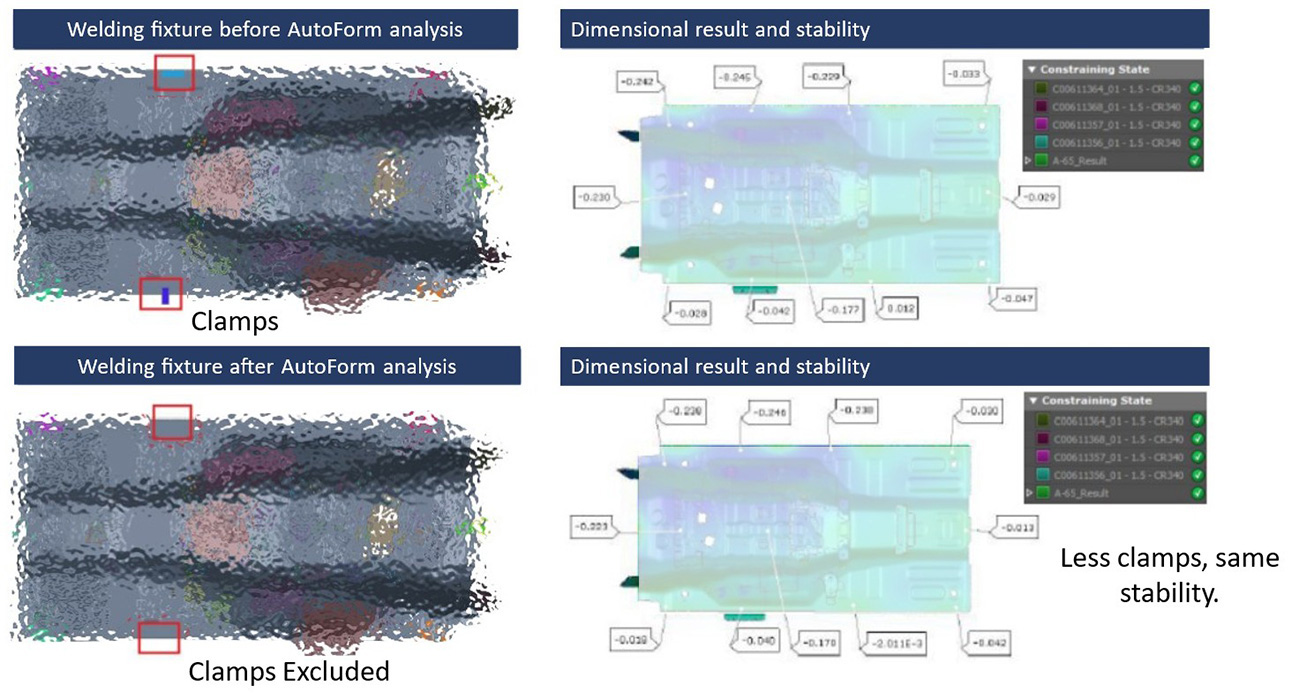
Figure 9 – Comparison of RPS and datums
Step 2.1 (Use Case 2 – Forming and Assembly Robustness Integration)
Beyond the original link between Forming and Assembly simulations, this approach also enables the engineering team to determine whether an assembly issue originates from the welding fixture or from inherent variation in the stamping process, allowing corrective action to be directed at the root cause.
Figure 10 shows a practical example of an inner reinforcement assembly whose stamping process was modified based on AutoForm Assembly and AutoForm Forming studies combined with robustness analysis. This analysis accounts for uncontrollable process variables, such as variations in material properties and thickness, reducing dimensional deviation from 1.355 mm (left) to 0.767 mm (right), an improvement of approximately 45%.
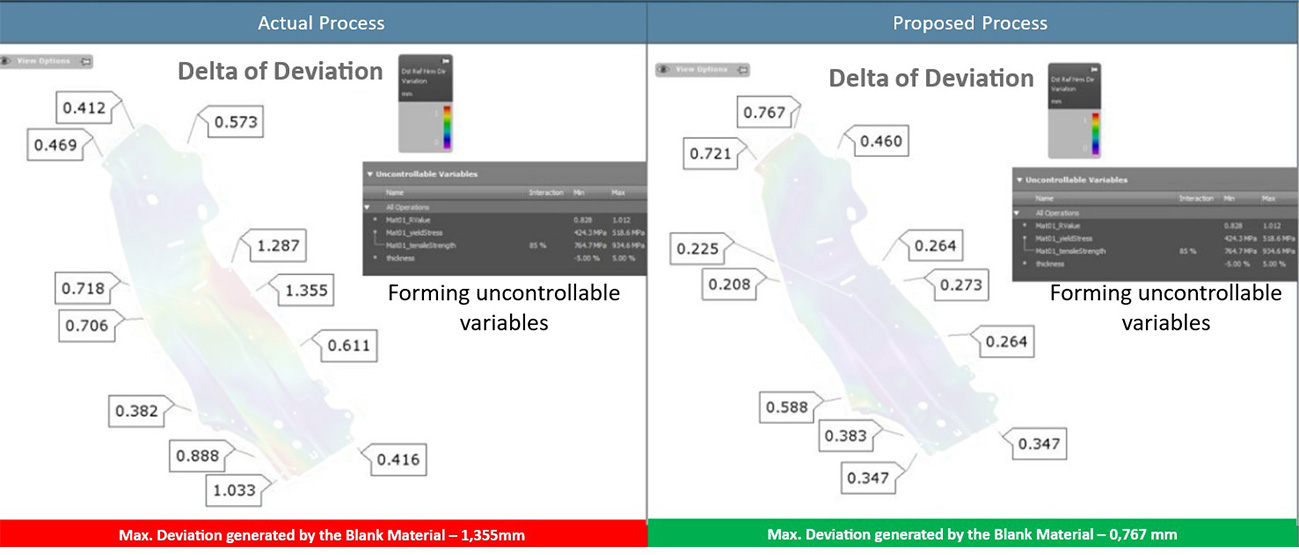
Figure 10: Use case 2 – Integrating forming and assembly to reduce dimensional deviation
Step 3 (Scan Results – Use Case 3)
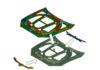
The virtual model is updated using CAD-0 data together with 3D scan data from actual parts, as shown in Figure 11. This makes it possible to validate compensation strategies and perform shimming studies (using adjustment shims to define support point locations) before the first physical tryout. The objective is to refine the process by understanding the impact of dimensional variation in each individual part using data from actual stamped components, whether manufactured in-house or supplied externally.
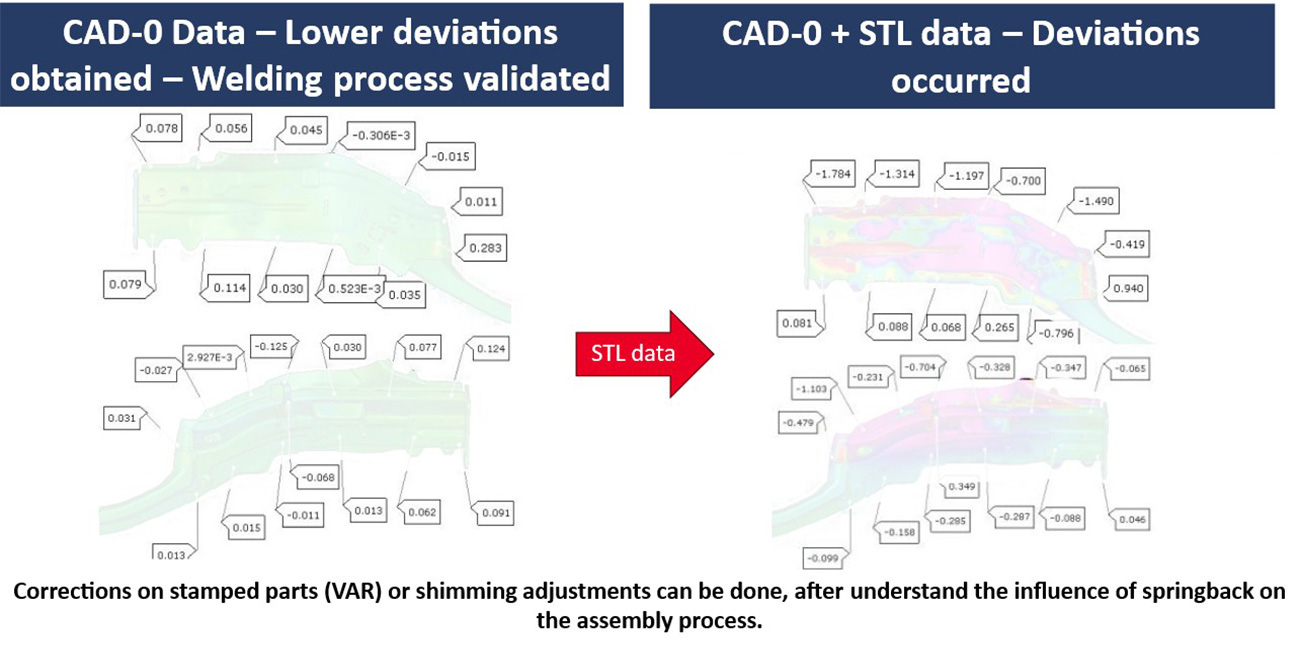
Figure 11: Use Case 3 – Integrating STL data from scanned parts into the assembly simulation
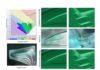
Based on the analysis, the technical conclusion was to maintain the original clamp configuration. The simulation demonstrated that applying additional clamping force in that specific area would not correct the deviation because the issue resulted from the material’s elastic recovery (springback) after stamping. This insight avoided the cost of trial-and-error tooling modifications that would have been less efficient and less effective during physical tryout.
The implementation of Virtual Assembly integrated into the simulation cycle represents a significant advancement in Gestamp Brazil’s manufacturing engineering, delivering substantial reductions in both time and cost. The transition from isolated analyses to a continuous flow of data enables the complex behavior of welded assemblies to be predicted with a high degree of accuracy.
Key Learnings
Accuracy: Predicting springback and its impact on assembly significantly reduces the number of physical tryout iterations.
Synergy: Integrating the simulation, plant, and quality departments ensures that feedback is incorporated into development in a structured manner.
Competitiveness: Virtualization strengthens Gestamp Brazil’s position as a strategic partner for OEMs by providing robust technical feasibility within shorter lead times.
The experiences of the professionals involved reinforce the importance of virtual validation. Regarding the evolution of engineering, Leonardo Dompieri states:
“The future of engineering lies in the ability to virtually validate complex processes, and Virtual Assembly is one of the pillars of this digital transformation.”
Regarding the improvements achieved in geometric quality and physical tryouts, Renan Goivinho adds:
“AutoForm Assembly has contributed to enhancing assembly evaluations and technical decision-making. Its application in GD&T validations, welding fixture reviews, and tryout support has added value to development while improving the dimensional quality of the assemblies.”
We would like to thank Renan Goivinho and Leonardo Dompieri for their partnership and co-authorship of this article, as well as their directors, Leandro Pedraçolli and Vinicius Rios, for supporting the publication of the outstanding results achieved at Gestamp Brazil. They also extend their appreciation to their colleagues in the stamping and assembly departments for their contributions over the past several years through the application of AutoForm Assembly and AutoForm Forming across the production and engineering workflow.