On October 31, 2025, the “AutoForum 2025” user conference was held at Bellesalle Akihabara. One of the customer cases was titled “The Effects of TriboForm on Press Forming Simulation with Steel Material,” presented by Mr. Nakagawa from the Sheet Metal and Plastic Production Engineering Department at Mitsubishi Motors Corporation (MMC). This article provides an overview of the presentation.
The Effects of TriboForm on Press Forming Simulation with Steel Material
1. Background
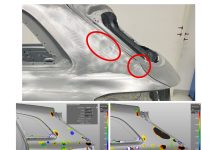
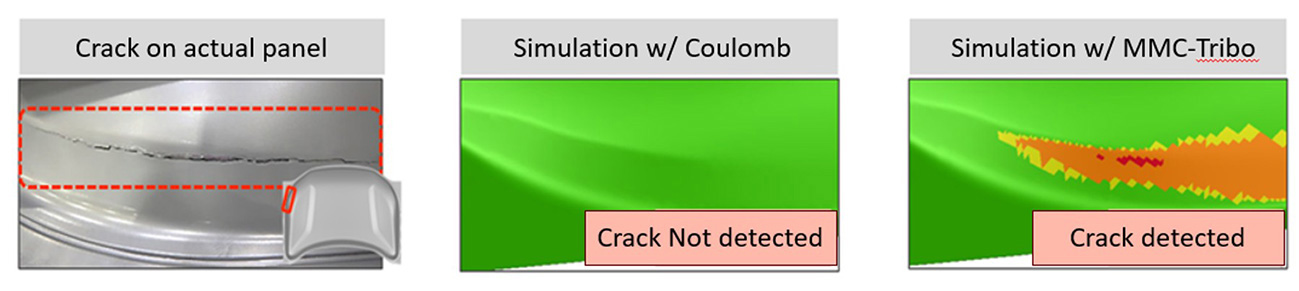
During the initial tool tryout for a hood outer part, a crack was found in the draw operation. The part was formed using lock beads, which are beneficial for material utilization and process stability but leave only limited options to adjust material flow once a crack occurs. The finding was therefore important not only because of the crack itself, but also because it had not been detected in the prior CAE simulation carried out during process engineering.  MMC reviewed several possible influences on crack prediction, including the process setup, material data, and tool surface conditions. Friction was selected as one of the key topics because it directly affects material flow and can have a strong impact on crack-critical areas As a first step, MMC compared the conventional Coulomb friction approach with a TriboForm advanced friction model. For the hood outer, this more detailed friction description reproduced the crack-critical area that had not appeared in the original simulation. This result encouraged MMC to look more closely at friction and tool surface conditions as possible reasons for the difference between simulation and tryout.
2. Creating an MMC-Specific Friction Model
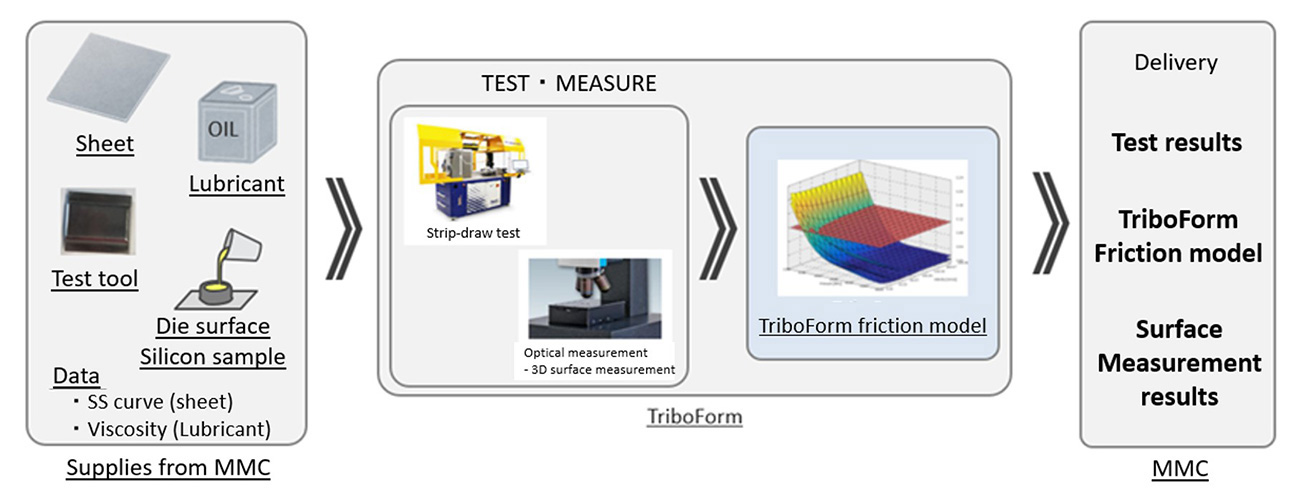
After this first improvement, MMC wanted to investigate the topic in more detail and represent its actual conditions more accurately. For this reason, the team decided to rely on a tailored TriboForm friction model based on MMC-specific materials, lubricants, and tool surface data.MMC provided the relevant sheet materials, lubricants, and surface information. Based on these inputs, sliding tests and surface roughness measurements were carried out, and a dedicated friction model was developed for MMC. In the following sections, this model is referred to as the MMC-specific friction model.
The hood outer therefore provided a practical case for studying whether a more realistic friction description could improve the understanding of the crack-critical behavior observed during tryout.
3. Understanding the Influencing Parameters
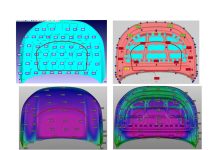
To understand the hood outer result in more detail, MMC used AutoForm-Sigma for systematic parameter variation. The focus was on tribological factors that could be defined and varied in the simulation, such as tool surface roughness on different tool areas. This made it possible to evaluate not only whether a crack appeared, but also which factors had the strongest influence on the result.
The Hood Outer
For the hood outer, the original simulation with Coulomb friction did not show the crack observed at the front corner area of the part. When the MMC-specific friction model was used, the simulation reproduced the crack-critical region more clearly and was closer to the behavior observed during tryout.
The parameter study then helped identify which tribological factors were most influential. In this case, the crack was related to planar strain deformation and the maximum major strain. Among the parameters investigated, the punch surface roughness showed by far the strongest influence on the crack-critical result.
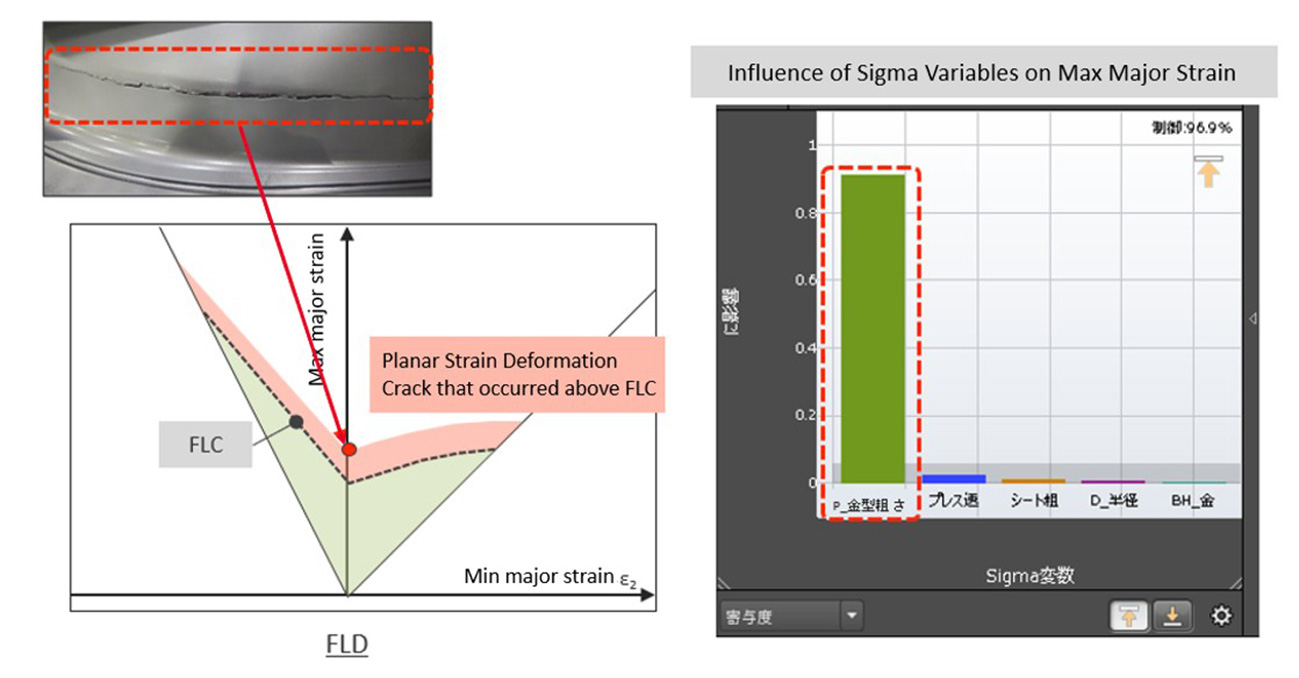
This indicated that the hood outer result was particularly sensitive to punch-side surface conditions. The MMC-specific friction data therefore helped represent the material flow and strain development more realistically than the original Coulomb friction setup and allowed the crack-critical area to be reproduced in the simulation.
The Front Door Outer
Based on the findings from the hood outer, MMC extended the investigation to the front door outer. In this case, a crack was found around the door handle area during tryout, while the initial simulations did not reproduce this critical area sufficiently. This made the part an important follow-up case for understanding which additional factors influence the prediction.
As with the hood outer, MMC selected relevant tribological parameters and varied them systematically. The results indicated that the crack in the handle area was related not to strain exceeding the forming limit curve but to local thinning. The most influential factors were identified as punch roughness, die roughness, and punch radius roughness.
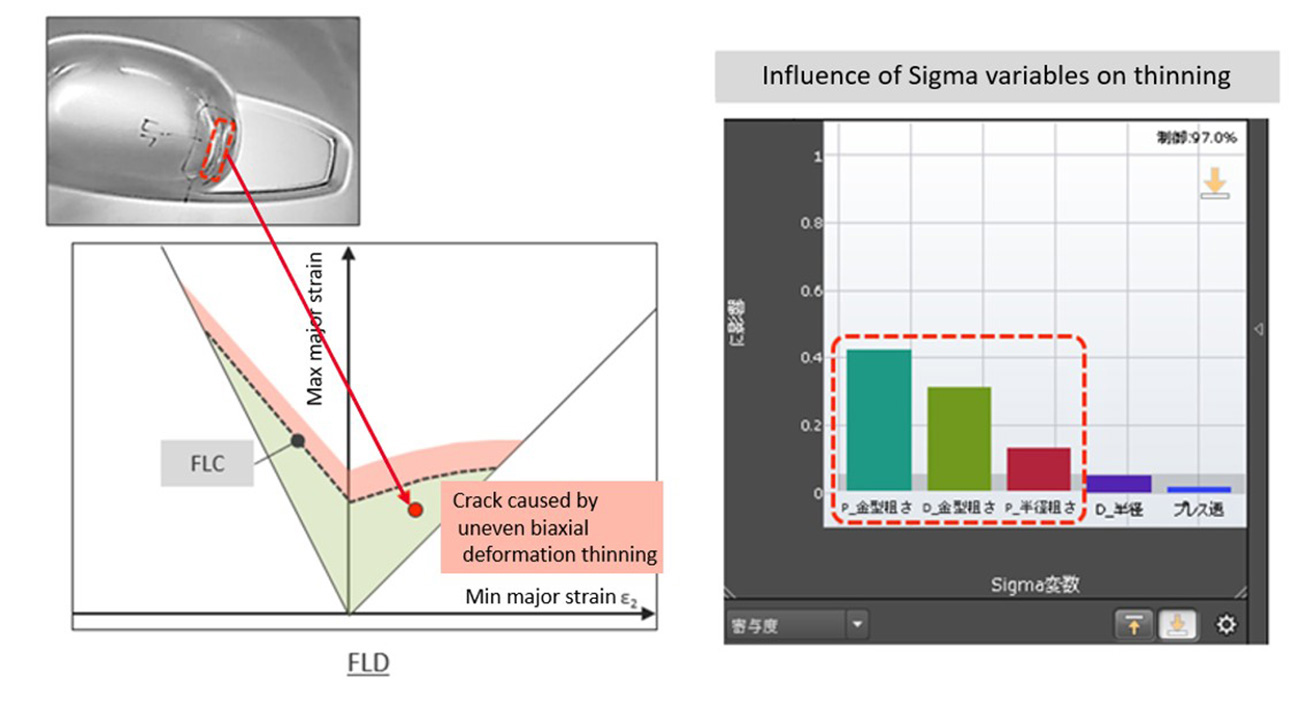
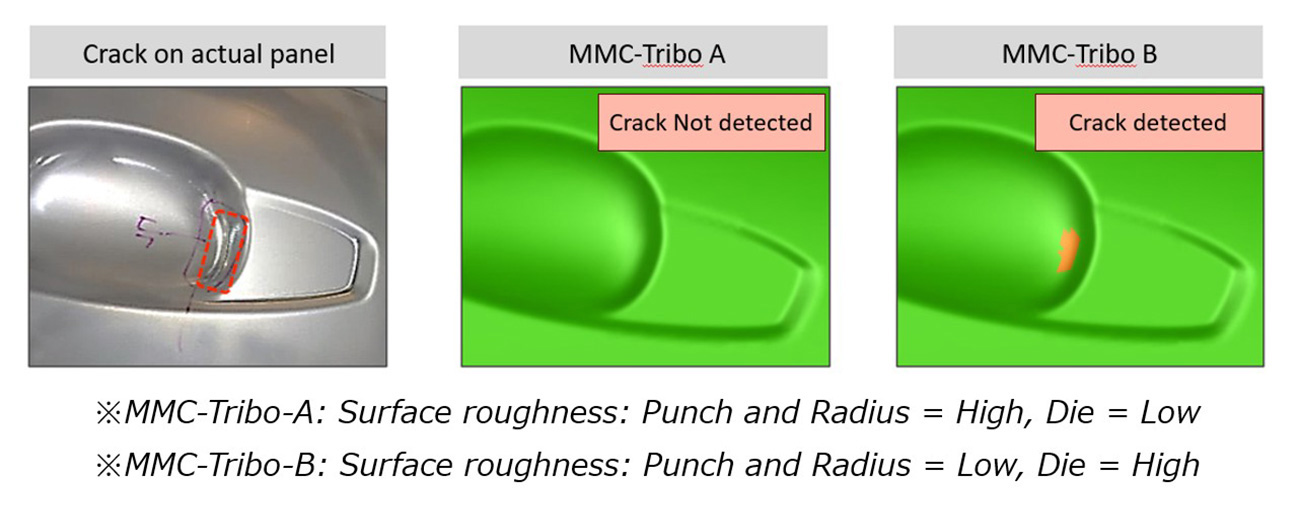
This finding underlines the importance of realistic tribological parameters. A detailed friction description can provide significant value, but its predictive quality depends on the quality of the input data, especially where local material flow and thinning are strongly influenced by punch and die surface conditions.
4. Conclusion
The study showed that a more realistic description of friction and tool surface conditions can improve the understanding of crack-critical forming behavior. For the hood outer, the updated friction description helped reproduce the crack observed during tryout. For the front door outer, the analysis revealed that the assumed punch and die roughness values were decisive for representing the local material flow and thinning behavior correctly.
Beyond improving a single simulation result, the main value of the investigation was the ability to identify the parameters that matter most. This helps focus engineering attention on the right physical factors and supports more reliable process decisions before tool tryout. By reducing unexpected issues in the initial tryout phase, MMC aims to reduce correction effort, secure more time for tool maturation, and continue improving the robustness of its press forming processes.